
Many sugar, sweetener, agro-food product, food ingredient and feed additive processes incorporate a purification or decolourisation step. This is to remove unwanted colours, proteins, byproducts or taste and odour compounds that have been generated during their manufacture and may be considered undesirable by the end user or customer.
Colour bodies are generally large molecules which may change their degree of adsorption depending on the pH of the solution. These bodies may also be generated by an increase in process temperature.
Removal of unwanted taste, odour, colour and byproducts also may have several potential benefits such as improving the visual appearance of the final product or improving its yield. Purification of food grade products can also enable the production of higher purity or higher value products.
The removal of impurities from sugar syrups, sweeteners, amino and organic acids is also vital to the production of a high-quality stable product.
Activated Carbon for decolourisation and purification
Activated carbons either, in a powder or granular form, are an effective and economic solution for the decolourisation, purification and the removal of contaminants.
Purification or decolourisation with granular activated carbons is carried out by passing through a filter bed of carbon whereas powder activated carbons are typically used in batch operations.
To ensure the final product meets specific purity standards, specialised grades of high purity powder or granular activated carbon are often required. Chemviron provides such grades of high purity powdered and granular activated carbons for applications, where low acid soluble ash and low leachable content are necessary.
Food and sweetener plants may use their own water source and so the use of activated carbon can provide an additional treatment barrier contributing to the removal of potential pollutants such as herbicides, pesticides or PFAS. Treatment of this water with activated carbon is covered in more detail in other articles.
A wide range of sugars, sweeteners, food grade products or additives such as amino acids, glycerine and edible oils can be decolourised or purified using activated carbon and some of these products or applications are covered in more detail in the following sections.
Activated carbon used in Cane Sugar Refining
Carbonaceous materials have been used, since the early days, in sugar refining for the decolourisation of various sugar solutions. In fact, the use of bone char for sugar cane refining most likely marked the birth of this industry.
The raw sucrose is extracted from the sugar cane, processed and then purified under basic conditions to avoid sugar inversion. The removal of colour components from clarified cane sugar liquors was critical to produce sugars of the highest quality in a crystal or liquid form.
Since activated carbon has three to four times the active surface area as that of bone char, it turned out to be a more cost-effective adsorbent. This higher surface area translated into higher decolourising capacity and higher product throughput, benefiting the refiners. Activated carbon became one of the more effective decolourising and deodourising media and is widely used throughout the world for consistent quality sugar production.
CaneCAL carbons are bituminous coal reagglomerated granular activated carbons specially designed for the treatment of cane sugar liquors. CaneCAL carbons have a unique pore structure as magnesite has been bonded into the carbon granules in the manufacturing process.
These carbons are designed to combine their pH controlling ability with a high decolourisation capability to provide an important buffering capacity to sugar solutions. This is designed to limit sucrose inversion so minimising sugar losses in the process.
Powdered activated carbon such as Acticarbone®, with a specific pH specification may also be used in various stages of the cane sugar refining process.
Activated Carbon for Sugar, Sweeteners & Starch Hydrolysate purification
Many different sugars, sweeteners and starch hydrolysates require the removal of taste and odour compounds and colour contaminants to a high standard, particularly as end-user specifications become stricter. Sugar and sweetener products are typically purified before final crystallisation.
Starch, found primarily in wheat, maize or corn and potatoes, is a long chain polymer of glucose with a high molecular weight. Its hydrolysis forms starch-based sweeteners or glucose syrups which contain a mixture of different carbohydrates such as dextrose and maltose in variable proportions. Further processing of these glucose syrups produces hydrogenated starch hydrolysates (HSH) or polyols (sugar alcohols) such as sorbitol and mannitol, which are considered as sugar free sweeteners. Inulin’s which are found in chicory are naturally occurring polysaccharides.
Activated carbon is used for the removal of a whole range of sugar and sweetener contaminants. Colour may come from the initial source, impurities, colour precursors or colour forming compounds. Hydroxy methyl furfural (HMF) for example, is a degradation product of sugars and a precursor of colour that may be formed at higher temperatures.
Activated carbon can also remove foaming agents which come from proteins or natural surfactants, amino acids, or off flavours. It may also be used to remove a range of impurities from the process operations such as natural pigments, melanoidins and caramels or lignin from such as cellulosic sugars.
During the production of sweets, intermix products may be generated when moving from one batch to another, as scrap candy. The scrap candy or any off-spec product can be recycled for reuse with acid washed activated carbon, either in granular or powder form, which are then used to remove colour,
Concentrated fruit juices, produced from apple or grape are also widely purified using activated carbons and our Acticarbone® range are particularly effective for this application.
The range of sugar and sweeteners that can be purified or decolourised using activated carbon include:
Acesulfame potassium | Liquid sugars |
Artificial Sweeteners | Maltitol |
Aspartame | Maltodextrin |
Cane Sugar | Maltose |
Carbohydrates | Mannitol |
Concentrated fruit juices | Oligofructose |
Corn syrups | Polydextrose |
Cyclodextrin | Polyols – sugar alcohols |
Dextrin’s | Polysaccharides |
Dextrose | Saccharin |
Erythritol | Scrap Candy |
Fructo-oligosaccharides (oligofructose) | Sorbitol |
Fructose | Starch sweeteners |
Glucose | Sucralose |
High Fructose Corn Syrup (HFCS) | Sugar Cane |
Hydrogenated starch hydrolysates (HSH) | Treacle |
Inulin | Xylitol |
Lactose |
Chemviron has extensive practical expertise in the application of activated carbons in the sugar and sweetener industries from initial assessment through to design support in a decolourisation plant.
Please feel free to contact us for specialist advice and support.
Amino Acids & Food Grade Product Purification with Activated Carbon
The use of activated carbon is often an important step in the manufacturing and processing of amino acids from fermentation processes, for example. Activated carbon is typically used to remove impurities, by-products or colour or to further upgrade the amino acid to help manufacturers achieve the required purity standards.
Activated carbon may be applied as a finishing or polishing step either in powder or granular form and carbons from our Acticarbone® range are used for this application.
In the treatment of fermentation broth, for such as monosodium glutamate (MSG), selected grades of low ash activated carbons are used for colour removal.
Some examples of the organic and amino acids that activated carbon can treat include:
Adipic Acid | Lysine |
Amino Acids | Mono Sodium Glutamate (MSG) |
Ascorbic Acid | Natural Extracts |
Citric Acid | Tannic Acid |
Flavour Enhancers | Tartaric Acid |
Folic Acid | Taurine |
Gelatine | Threonine |
Glycerine | Tryptophan |
Vitamin | |
Malic Acid | Yeast Extracts |
Glycerine Purification with Activated Carbon
Glycerine (or Glycerol) is typically obtained from plant and animal sources, or as a byproduct from the manufacture of biodiesel. It is often vital to therefore remove any colour variations that have occurred, odour constituents, and any other unwanted contaminants.
Activated carbon is typically used in the final stages (“bleaching”) of the purification process with the aim to produce a colourless final product. Chemviron provide selected carbons either in granular form or as a powder for dosing in a batch process.
Activated carbon may also be used in the primary stage of crude glycerine purification or refining to reduce bulk colour and fatty acids.
Vegetable, Edible and Fish Oil Purification with Activated Carbon
Vegetable or edible oils may be contaminated with unwanted natural and anthropogenic compounds, which originate from plant spraying with contaminated pesticides or herbicides, the drying process, or contamination during transportation.
These may include polycyclic aromatic hydrocarbons (PAH’s) such as benzo alpha pyrene (BaP), dioxins and polychlorinated biphenyls (PCB) and as well as a variety of other contaminants such as chlorophyll which can affect the oil’s taste or smell. Removal of polyphenols and proteins also improves the oils transparency. Other contaminants include MCPDs – chloropropanols which are a group of chemical contaminants that may be formed during the heat processing of edible oils.
There are legal obligations on limiting the values and the EU Regulation (EC) No 1881/2006 sets maximum levels for certain contaminants in foodstuffs.
| Avocado Oil | Linseed Oil |
| Coconut Oil | Olive Oil |
| Cod liver Oil | Palm Oil |
| Corn Oil | Rapeseed Oil |
| Fatty Acids | Rice bran Oil |
| Fish Oils | Soybean Oil |
| Grape seed Oil | Sunflower Oil |
| Jojoba Oil | Vegetable Oils |
Although these contaminants are typically at very low levels such as parts per billion, many of these can still be effectively removed using activated carbons. Typically, the activated carbon is used in a powder form, which enables a better control of the process and may be used on its own or mixed with bleaching earth.
What process factors may be important for the use of Activated Carbon?
The most effective carbon may depend on several factors as different grades and forms of activated carbon may be used, depending on the specific product, the production process and operating conditions. For example, for decolourisation applications, a molasses specification is usually required, whereas for high purity or low pH solutions, an acid washed carbon is often required.
It is particularly important to understand the type of impurities or colour to be removed as well as the final colour or quality objective required as activated carbon will remove organic based colours but is less effective for inorganic based colours.
The operating temperature is also an important factor as often such processes operate at elevated temperatures, and higher temperatures may influence the carbon’s adsorption efficiency.
The viscosity of the liquor will also affect the carbon’s effectiveness as the diffusion speed of the contaminant is directly related to viscosity and so the higher the viscosity, the longer the contact time required. It is important, to note that the contact times for decolourisation processes are typically in the hours rather than minutes which is required to ensure an effective treatment.
Will Activated Carbon be effective for my process?
Chemviron provide technical support to enable many of the leading sweetener and food companies to make the best use of their activated carbon purification processes.
If you have a sugar, sweetener, food product or additive that you would like to be purified or decolourised, it is important for us to understand some of your basic process information. Therefore, any relevant details that can be provided on process operations or conditions is helpful.
This basic process detail will enable our experienced team to understand your process and from our extensive experience, assess the likely efficiency of activated carbon technology for this application. Indicative carbon dosage rates can then often be provided for most applications.
An initial evaluation of process liquors may be appropriate with a lab evaluation to check contaminant or colour levels. This could be followed by isotherm testing to validate the suitability and efficiency of an activated carbon solution.
On site-pilot trials can also be performed to verify breakthrough curves and generate realistic operational data. Chemviron also has a range of small carbon vessels available for lab and plant testing which include our Minicyclesorb® units.
Powder Activated Carbons for Purification and Decolourisation
The Chemviron Acticarbone® premium range of wood-based activated carbons are manufactured from marine pine woods at the heart of one of Europe’s largest industrial pine forests in France. Our facility includes the production of both physically (steam) and chemically activated carbon grades which are designed for use in purification and decolourisation applications.
The Acticarbone® powder carbons are manufactured to a high standard of purity and filterability which are valued in such applications. These carbons also have a controlled pH to be compatible in food solutions and their high activation levels enable carbon consumption to be optimised.
The Acticarbone® Ultra-Pure grades have been specifically developed with very low ash contents and pore structures, which are required for many of these purification processes.
All the Acticarbone® range comply with the Food Chemical Codex (FCC). For detailed advice on the most appropriate carbon for your application, please contact our technical support team.
Granular Activated Carbons for Purification and Decolourisation
Chemviron produce several high quality reagglomerated coal based granular activated carbons specially designed for the purification and decolourisation of sugar and food solutions.
CPG® LF are acid washed granular activated carbons, exclusively produced by Chemviron which have been supplied to the sugar and sweetener industry for many years. These carbons are produced by a highly developed and strictly controlled manufacturing process involving a pressure acid wash to ensure very low acid soluble ash, iron leach and low fines content. This ensures a high-quality product with an ideal porosity offering optimum kinetics for the adsorption of a wide range of coloured organic impurities.
CPG-LF granular activated carbons have been developed for multiple reactivation which is a key factor in the sugar and sweetener industry. The spent granular carbon may be recycled by reactivation for reuse and so avoid any disposal costs.
Granular activated carbons are particularly suited to continuous process operations which may be used in simple fixed carbon vessel systems to large scale purification plants, perhaps using pulse bed adsorbers. Pulse bed adsorbers are typically used in applications where the carbon becomes spent relatively quickly, and replacement carbon is then continuously fed from a charge tank. Such systems can also include an in-line reactivation furnace for immediate recycling of the spent activated carbon for return to the process for reuse.
Reactivation of Granular Activated Carbons in Food Processes
For most of these applications, the granular activated carbon is typically suitable for reactivation.
Once the spent granular carbon is saturated or the colour or purification objective has been reached, it would then be recycled by thermal reactivation in one of our dedicated potable/ food furnaces. Reactivation involves heating the spent carbon in a high temperature reactivation furnace, in which the undesirable organics compounds on the carbon are thermally destroyed and the carbon recovered to a suitable quality for reuse in the same process.
For some applications, relative frequent reactivation is required which is key to the long-term use of this activated carbon technology for many sugar processes, for example.

Mobile Carbon Filter Service for Food Processes
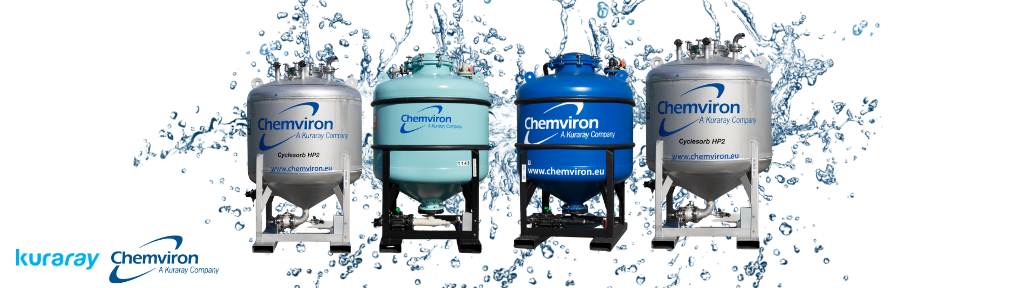
If this is for a new process operation, why not consider the use of our mobile carbon filter service, available on a rental basis. These Cyclesorb® activated carbon filters have been designed to simplify the use of granular activated carbon technology.
The Cyclesorbs® can be used on site as both a purification vessel and a transport vessel to move carbon to and from site, without the need for any on-site carbon exchange. Then once the process step is complete or the carbon is spent, the Cyclesorb® mobile carbon filter may be returned to Chemviron or exchanged for a new unit.
Chemviron has a range of Cyclesorb® mobile activated carbon filters of different sizes and capabilities, available for immediate use. These include large and small stainless-steel Cyclesorb® vessels which can be quickly installed and operated at temperature.
The Cyclesorb® range also includes smaller stainless steel mobile carbon filters that can be easily operated inside production plants and may be transported in and out in site lifts, if required. We also have Minicyclesorb® units available for pilot trials.
If you need help on the choice of activated carbon, the potential for reactivation, our mobile carbon filter service or just some further advice, please contact us – contact our technical team.

Read more
Producing wine and distilled liquors from natural ingredients is frequently …
Pesticides and Persistent Organic Pollutants The issue of pesticides in …
The production of fruit juices, beer and other beverages can …