
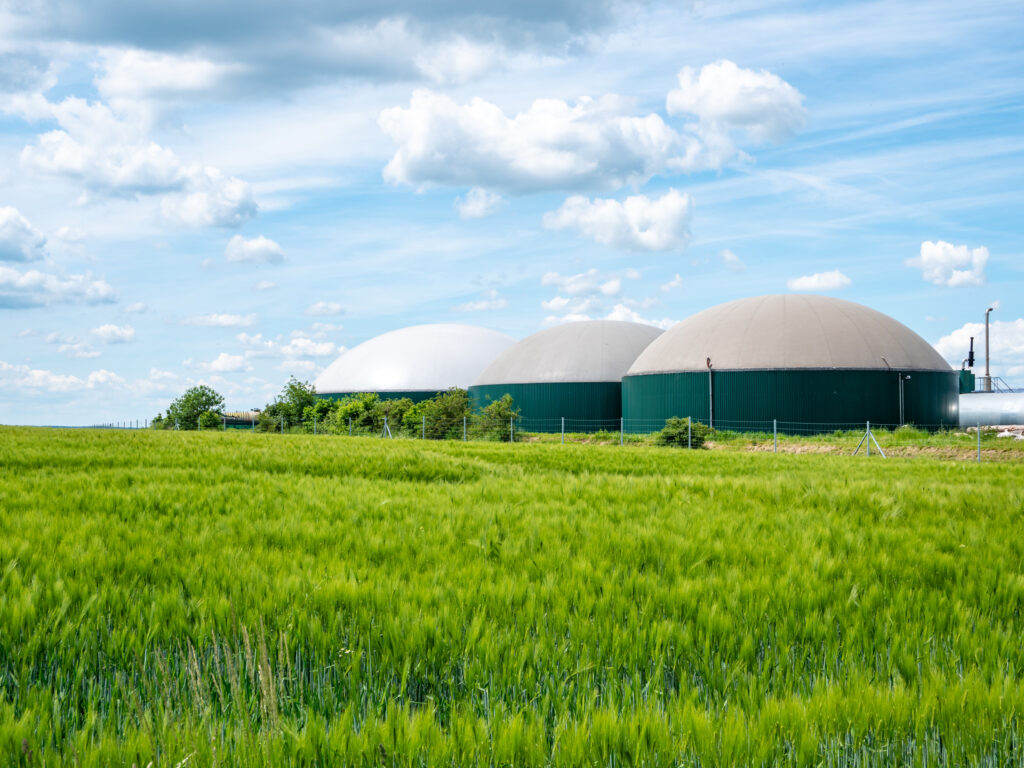
Biogas is doorgaans een mengsel van gassen, waaronder methaan (CH₄), kooldioxide (CO₂), waterstofsulfide (H₂S), vluchtige organische stoffen (VOC’s) en atmosferische gassen zoals stikstof (N₂), zuurstof (O₂) en water (H₂O). De exacte samenstelling van biogas kan variëren afhankelijk van de herkomst en aard van de afval- of biomassa-input en de prestaties van het vergistingsproces.
Om biogas te kunnen gebruiken als brandstof, bijvoorbeeld voor elektriciteitsopwekking of injectie in het aardgasnet, moet het echter worden gezuiverd tot zeer lage grenswaarden om de vereiste zuiverheid te garanderen. Daarom moet ruw biogas verschillende behandelingsstappen ondergaan om onzuiverheden te verwijderen en het om te zetten in een direct verbrandbare brandstof of hernieuwbaar aardgas.
Wat zijn deze onzuiverheden?
Er bestaan veel verschillende soorten verontreinigingen of onzuiverheden die kunnen voorkomen in biogas- of biomethaanstromen.
Waterstofsulfide (H₂S) en andere zwavelverbindingen, zoals mercaptanen, die kunnen ontstaan uit de afbraak van zwavelhoudende biomassa, kunnen corrosieproblemen veroorzaken in motoren en installaties en zo de downstream-processen beïnvloeden. Deze verbindingen worden doorgaans in de vroege stadia van biogasopwerking verwijderd.
Vluchtige organische stoffen (VOC’s) komen meestal uit huishoudelijk afval en zijn vooral aanwezig in stortgas en bepaalde soorten landbouwbiogas. Ze moeten worden verwijderd vanwege hun impact op de verdere processtappen.
Siloxanen in biogas zijn vluchtige organosiliciumverbindingen die doorgaans afkomstig zijn uit huishoudelijke producten zoals detergenten, shampoos, deodorants, tandpasta’s en cosmetica. Deze siloxanen bevatten een Si–O–Si-binding die bij verbranding siliciumdioxide (SiO₂) kan vormen. Dit slaat neer in motoren en andere componenten, veroorzaakt afzettingen en vermindert het rendement, waardoor vaker onderhoud nodig is.
Ammoniak kan eveneens ontstaan door biologische afbraak van stikstofhoudende biomassa. Bij hoge concentraties wordt ammoniak echter beschouwd als een remmende factor voor methaanproductie.
Formaldehyde kan ook worden gevormd tijdens onvolledige verbrandingsprocessen van langere koolwaterstofketens.
Welke onzuiverheden kunnen met actieve kool worden verwijderd?
Deze verontreinigingen kunnen effectief uit biogas- of biomethaanstromen worden verwijderd met behulp van actieve kool. Voor de meest efficiënte verwijdering van onzuiverheden zijn echter doorgaans verschillende soorten actieve kool nodig, afhankelijk van of de belangrijkste verontreiniging een organische of anorganische verbinding is.
Organische onzuiverheden
Enkele van de typische organische onzuiverheden die effectief kunnen worden verwijderd met behulp van actieve kool zijn onder andere de volgende:
| Alpha-pinene | Aromatic Compounds |
| Benzene | Carene |
| Cumene | Cymene |
| D3: Hexamethylcyclotrisiloxane | D4: Octamethylcyclotrisiloxane |
| D5: Decamethylcyclotrisiloxane | D6: Dodecamethylcyclotrisiloxane |
| Dodecane | Ketones? |
| L2 or MM or HDMS: Hexamethyldisiloxane | L3 or MDM: Octamethyltrisiloxane |
| L4 or MD2M: Decamethylterasiloxane | L5 or MD3M: Dodecamethylpentasiloxane |
| Limonene | Methyl ethyl ketone |
| Naphthalene | Oils |
| Pinene | Silanes |
| Siloxanes | Solvents |
| Terpenes | TMS Tetramethyl silane |
| Toluene | Trimethyl silanol |
Anorganische onzuiverheden
Voor anorganische onzuiverheden wordt doorgaans een geïmpregneerde actieve kool gebruikt om de meest effectieve verwijdering te bereiken. Dergelijke anorganische onzuiverheden zijn als volgt:
| Ammonia | Hydrogen Sulphide (H2S) | Formaldehyde |
| Mercaptans | Sulphur Dioxide (SO2) | Sulphur compounds |
Voor andere verontreinigende stoffen van een meer gespecialiseerde of anorganische aard, zie onze artikel “Wat zijn vluchtige organische stoffen (VOC’s)”.
Hoe kunnen we helpen?
De meest effectieve koolstof die gebruikt wordt voor de behandeling van een biogas- of biomethaanstroom kan afhankelijk zijn van de aard van het te behandelen gas, de procesomstandigheden van de installatie, de specifieke te verwijderen onzuiverheden en de vereiste behandelingsdoelstellingen die moeten worden bereikt.
Indien dit vereist is voor een nieuw behandelingsproces, overweeg dan het gebruik van een mobiel koolstoffilter. Dit zijn actieve-koolfilters die zowel op locatie kunnen worden gebruikt als biogasbehandelingsvat en vervolgens van en naar de locatie kunnen worden getransporteerd, zonder dat er een koolstofvervanging op locatie nodig is.
Als u hulp nodig heeft bij de keuze van actieve kool, ondersteuning van onze mobiele koolstoffilterservice of gewoon extra advies, neem dan gerust contact met ons op.